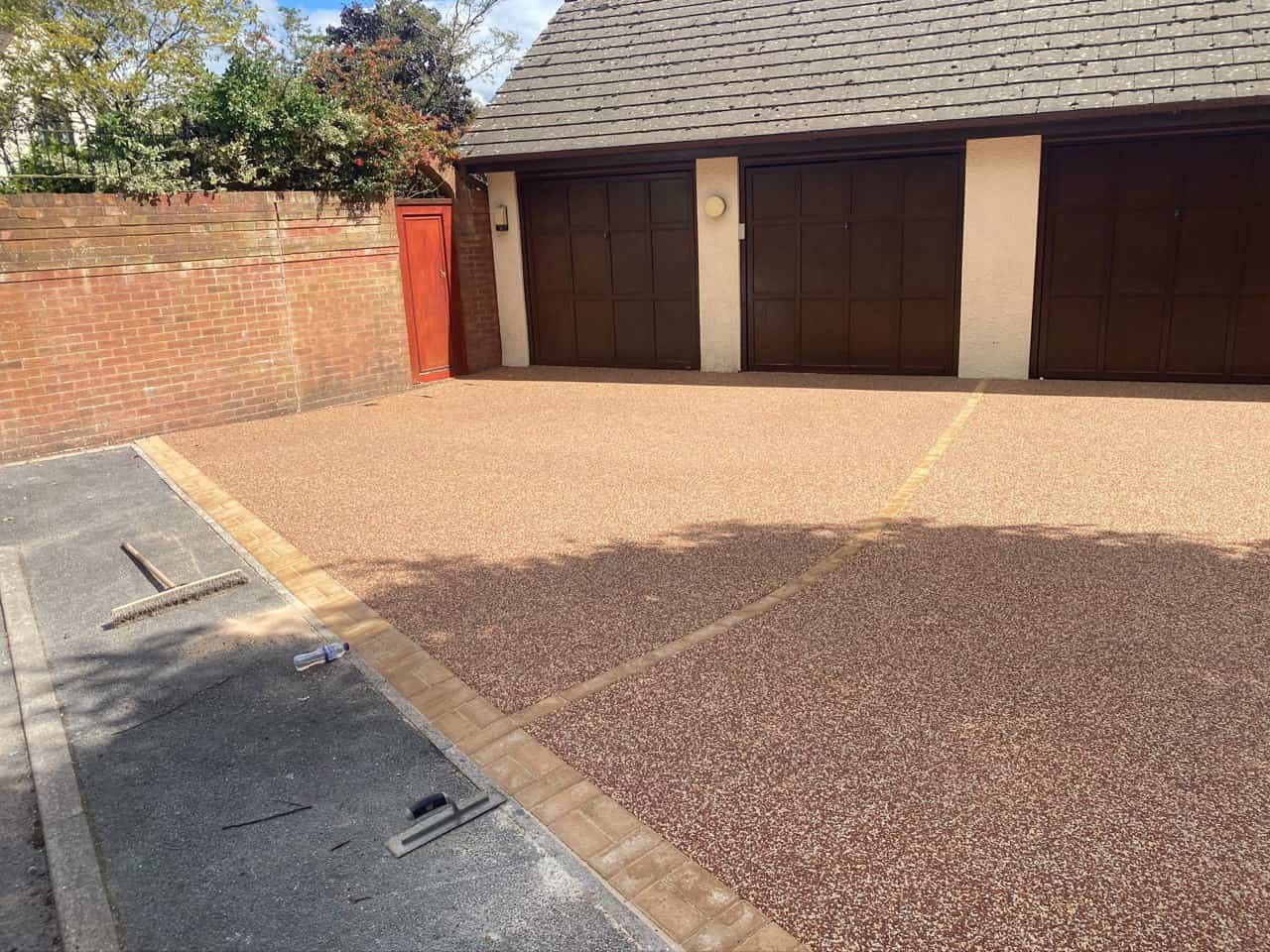
The Benefits of Choosing a Tarmac Driveway
Choosing the right surface for a driveway involves more than deciding what looks suitable from the road. A driveway needs to cope with regular vehicle movements, repeated parking, changing weather conditions and everyday household use while continuing to provide a practical entrance to the property. The quality of the construction beneath the finished surface is equally important.
For homeowners in Arbury, Cambridgeshire, tarmac can provide an effective solution for both straightforward parking areas and larger driveway layouts. Its smooth finish, suitability for regular vehicle traffic and ability to accommodate different shapes make it a practical choice for many properties. When professionally installed over a properly prepared base, a tarmac driveway can provide a dependable surface designed around everyday use.
Why Choose Tarmac for Your Driveway?
Tarmac has long been used for surfaces that need to accommodate vehicles regularly. For residential driveways, its main advantages come from combining a relatively simple appearance with practical performance.
However, the benefits of tarmac depend heavily on correct installation. Ground preparation, supporting layers, levels, drainage and edge construction all contribute to how well the completed driveway performs.
A Smooth and Practical Surface for Vehicles
One of the most noticeable advantages of a tarmac driveway is its continuous surface.
There are no individual paving units across the main area, creating a relatively smooth finish for vehicles entering, leaving and parking. This can be particularly useful on driveways where cars need to turn or manoeuvre regularly.
A consistent surface can also create a clearly defined parking area.
For households using the driveway every day, this straightforward practicality is one of tarmac’s strongest characteristics.
Well Suited to Regular Vehicle Traffic
A residential driveway may experience considerably more use than homeowners initially realise.
Cars can enter and leave several times each day, while particular wheel routes and parking positions experience repeated loading. Tarmac is well suited to this type of regular vehicle use when the supporting construction has been prepared appropriately.
The key is ensuring that the driveway is designed for its intended purpose.
A professionally prepared base helps distribute vehicle loads and provides stable support beneath the finished surface.
Tarmac Works Well for Multi-Car Driveways
Properties with several vehicles need a driveway capable of accommodating regular traffic across a larger area.
Tarmac can be particularly suitable because it creates one continuous surface across parking, driving and manoeuvring sections. This can help the entire area feel connected rather than divided into numerous smaller sections.
Planning remains important.
Parking positions, turning requirements and the routes vehicles regularly follow should be considered before installation so that the completed driveway works effectively for the household.
A Clean and Uncomplicated Appearance
Not every driveway needs an elaborate pattern or highly decorative finish.
Tarmac provides a simple, neat appearance that can work effectively with a wide range of property styles. Its uniform surface can help create a clearly defined entrance without competing visually with the house, garden or surrounding landscaping.
Edges can also be used to provide additional definition.
A carefully planned boundary between the tarmac and surrounding areas can help the driveway look intentional and well integrated into the property.
Suitable for Different Driveway Shapes
Driveways are not always simple rectangles.
Some properties have curved entrances, tapered boundaries, wider parking sections or areas that need to accommodate existing garden features. Because tarmac forms a continuous surface within the prepared area, it can adapt effectively to many different layouts.
This makes it useful when the available space needs to be used efficiently.
Professional planning can establish suitable boundaries and levels before installation so that the driveway follows the shape of the property naturally.
Tarmac Can Create a More Practical Entrance
The entrance is one of the most heavily used parts of a driveway because every vehicle normally passes across it.
A properly constructed tarmac entrance can provide a clear transition into the main parking area while accommodating regular vehicle movements.
This section requires careful preparation because it can experience frequent steering, braking and repeated loading.
Considering the entrance as part of the complete driveway construction helps produce a more coherent result than treating it as a separate section.
Good for Larger Driveway Areas
Where a property has a substantial area available for parking, using a highly detailed surface throughout can sometimes make the frontage appear unnecessarily busy.
Tarmac offers visual simplicity across larger spaces.
Its continuous finish can create a practical parking area while allowing boundaries, planting and other garden features to provide visual interest around it.
For larger driveways, this combination of functionality and understated appearance can be particularly effective.
Tarmac Can Work Well With Defined Edging
Edging plays both a practical and visual role in driveway construction.
A clearly defined boundary can separate the vehicle surface from lawns, planting areas or other parts of the garden. It can also help provide support around the perimeter where appropriate.
The edging should be considered during the design stage rather than added without reference to the wider construction.
When properly planned, it can give a tarmac driveway a neat and finished appearance while helping define its shape.
Proper Drainage Can Be Incorporated Into the Design
Managing rainwater is an important part of any driveway project.
The finished surface needs appropriate levels and falls so that water does not unnecessarily collect in low areas. This needs to be planned during the groundwork because the supporting construction establishes the levels of the final tarmac surface.
A professionally designed driveway considers drainage from the beginning.
This helps create a surface that functions effectively during wet conditions rather than relying on corrective work after installation.
A Well-Planned Surface Can Reduce Awkward Low Points
Uneven or poorly prepared driveways can develop areas where water repeatedly collects.
Correct groundwork helps establish consistent levels across the vehicle area. This is particularly important where the driveway changes direction, widens into a parking section or connects different parts of the property.
Careful preparation helps avoid unnecessary depressions.
The objective is to create a driveway where the surface and underlying construction work together rather than relying on the tarmac alone to correct unsuitable ground levels.
Tarmac Can Complement Paths and Other Hard Landscaping
A driveway often forms part of a wider outdoor layout.
Paths, entrance areas, garden boundaries and planted sections may all meet or sit alongside the vehicle surface. A straightforward tarmac finish can provide a useful visual foundation around which these other features are arranged.
The driveway does not need to dominate the frontage.
Thoughtful design can help it function as a practical vehicle area while allowing surrounding landscaping to retain its own character.
It Provides Clear Separation Between Driving and Garden Areas
An undefined vehicle area can make the front of a property feel disorganised, particularly where cars regularly encroach onto surrounding ground.
Installing a properly planned tarmac driveway creates a clear surface specifically intended for vehicles.
Defined edges can then separate parking and driving areas from lawns, borders or other garden features.
This can make the outdoor space easier to use because each area has a clearer purpose.
Maintenance Problems Can Often Be Identified Early
Tarmac surfaces can provide visible indications when an area begins developing a problem.
Cracks, settlement, edge deterioration and depressions can all signal that a particular section needs attention. Identifying these changes early provides an opportunity to investigate the cause before deterioration spreads.
Not every defect means that the complete driveway has failed.
Where surrounding construction remains stable, localised repairs may be possible without unnecessarily disturbing the rest of the surface.
Localised Tarmac Damage May Be Repairable
One advantage of maintaining an established driveway is that problems do not always affect the complete surface.
A damaged section caused by local settlement or another isolated weakness may sometimes be repaired while dependable areas remain in place.
The important factor is accurate diagnosis.
Repairing only the visible surface where the construction beneath has moved may allow the defect to return. Professional assessment can determine how far the affected area extends and what type of remedial work is appropriate.
Tarmac Can Provide Long-Term Practicality When Properly Constructed
The performance of a driveway depends on more than the surface material selected.
Tarmac benefits from being installed over correctly prepared and suitably compacted supporting layers. If the groundwork provides stable support and the driveway has been planned for its expected vehicle use, the finished surface can provide dependable everyday functionality.
This is why professional installation is particularly important.
The appearance of the completed tarmac may be what homeowners see, but much of the quality of the driveway is determined by the preparation underneath it.
The Base Is Critical to Driveway Performance
A tarmac driveway should never be considered only as a thin finished layer placed over the ground.
The supporting construction beneath it needs to provide a stable platform for vehicle loads. Where preparation is inadequate, movement within the base can eventually become visible through the surface.
This may appear as cracking, settlement or depressions.
Correct excavation and preparation appropriate to the site therefore form an essential part of creating a reliable driveway.
Professional Installation Helps Avoid Common Weaknesses
Many driveway problems originate from issues that are difficult to correct once the finished surface has been installed.
Unsuitable levels, insufficient support, poorly considered edges and underlying movement can all affect how the driveway performs.
Professional installation addresses these considerations before the tarmac is laid.
The ground, intended vehicle use, driveway layout and drainage requirements can be considered together so that the finished surface forms part of a complete construction rather than being treated as an isolated layer.
Is Tarmac Suitable for a Driveway Used Every Day?
Yes. Tarmac can be particularly well suited to a driveway that receives regular daily vehicle use.
Its continuous surface works effectively for parking, entering, leaving and manoeuvring. However, frequent use also makes construction quality especially important because repeated vehicle loading can expose weaknesses within poorly prepared supporting layers.
A driveway should therefore be built according to how it will actually be used.
The number of vehicles, common parking positions and turning areas can all influence how the project is planned.
Is Tarmac Suitable for Replacing an Existing Driveway?
Tarmac may be suitable when an established driveway has deteriorated to the point where a new surface is being considered, but the existing condition needs to be assessed first.
Simply covering an unstable driveway does not necessarily address the reason it failed.
Cracking, settlement and widespread deformation can indicate problems within the supporting construction. These issues need to be understood before a replacement surface is installed.
Proper preparation provides the new driveway with a much stronger foundation for future use.
Why a Professional Site Assessment Is Valuable
Every driveway has different conditions.
The available space, existing ground, access, levels, drainage and expected traffic all influence the most appropriate construction. A professional assessment provides an opportunity to consider these factors before work begins.
It also allows the driveway layout to be planned around practical everyday requirements.
For example, a household needing several parking spaces may require a different arrangement from a property where the driveway primarily provides straightforward access for one vehicle.
Tarmac Driveways in Arbury, Cambridgeshire
At Arbury Driveways, we understand that a successful tarmac driveway needs to combine practical design with appropriate groundwork and professional installation.
The driveway should be planned around the property, expected vehicle use, available space, levels and drainage. By considering these elements together, the finished tarmac surface can provide a neat and practical area for everyday parking and access.
For homeowners in Arbury, choosing professional driveway installation helps ensure that attention is given not only to the visible finish but also to the supporting construction responsible for its performance.
Conclusion
Tarmac offers several benefits for residential driveways. It provides a smooth and continuous vehicle surface, works effectively across different driveway shapes, suits regular traffic and can create a clean, uncomplicated appearance. It can also work particularly well for larger or multi-car parking areas where practical use is a priority.
The quality of a tarmac driveway, however, depends heavily on preparation beneath the surface. A stable base, suitable levels, well-planned drainage and appropriate edge construction all contribute towards dependable performance.
If you are considering a new tarmac driveway for your property in Arbury, Cambridgeshire, contact Arbury Driveways. We can assess the area and recommend an appropriate driveway installation based on the layout and everyday requirements of your property.
Call us on: 01223 857 079
Click here to find out more about Arbury Driveways
Click here to complete our contact form and see how we can help with your driveways.